
The Endgame
A reflection on why it feels like everyone is thinking so far ahead.

Last week, I met a startup founder working on some ambitious plans and we got to talking about what he was building. At some point I asked what he thought it might look like if it really worked, not in terms of market size, but how that future might look.
He laughed a bit and said it was funny that this is how people pitch startups now (the far future you’re imagining) and then went on to describe a future where money doesn’t exist at all.
I agree. It’s pretty weird. I’ve been in San Francisco for about a week and it feels like everyone I talk to spends most of their time imagining a future decades away (and that’s still a Walt Disney level estimate). We’re in a time where a startup’s key performance indicator could be their percentage of global labor transactions. This is a time where thinking like a time traveler feels like a prerequisite for building at a startup.
But as much as it feels silly, I think it makes a lot of sense. The technology we’re building now is transformative. And building it is as much as an engineering and economic problem as a philosophical one.
A couple years ago, I was at an intern farewell with Treasury Secretary Janet Yellen. Someone asked whether perpetual economic growth was possible in a world with finite resources. She smiled and said, candidly, “yknow, I hope so, I really do”.
I think about that answer a lot, because it points to something subtle: growth has never really been about resources, it’s about how much leverage people have to turn ideas into outcomes.
At the most basic level, doing anything meaningful requires two things:
Labor: skill, intelligence, time
Capital: tools, energy, materials
Economists roll up whatever magic happens that lets you use those to make things into a single term: total factor productivity. TFP is the part we can’t cleanly account for. It’s what separates stagnant eras from periods that feel like history suddenly sped up (and maybe why it feels like speeding up now).
Every major leap in human progress has come from increases in TFP. Thomas Malthus thought the world would end as population growth would outpace food production because land was finite. He was wrong, not because land expanded, but because the Haber-Bosch process made fertilizer abundant. The same pattern shows up again and again.
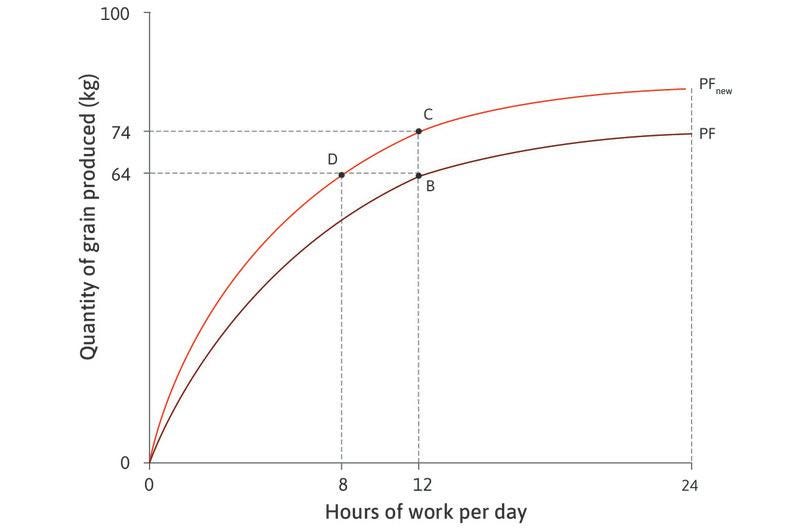
For most of modern history, knowledge was the bottleneck. It was scarce, expensive, and slow to transmit. The printing press began to break that constraint. The web and search engines finished the job. Information became abundant.
But even now, turning ideas into reality is expensive. You still need designers, developers, lawyers, operators. Work remains fragmented and rigid. Labor is scarce not because knowledge is rare, but because coordination and execution are. That’s the constraint we’re running into next.
This is why AI feels exciting. Not because it gives us more information, but because it threatens to make expertise abundant. In economics, that looks like an explosion in total factor productivity. AI doesn’t just optimize existing workflows. It collapses the cost of turning desire into action. And that (desire) is where the philosophy comes in.
So I’ve been thinking a lot about how to envision the “endgame” for tech today. It’s not just about market share or revenue multiples - it’s about reshaping how we connect, create, and fulfill our desires. That brought me back to some books that have been rattling around in my head, starting with a late-night reread of Freud, then into Lacan, and then a ton of time looking into Deleuze and Guattari’s Anti-Oedipus. What struck me wasn’t just their ideas, but how relevant it felt now in the age of AI.
Everyone keeps saying we’re on the edge of something big. After spending the time with Deleuze and Guattari, it’s made me think about that claim a little differently. What if machine learning ends up mattering less as a tool for optimization and more as a way of breaking people out of rigid systems?
Instead of forcing work, creativity, or attention into predefined boxes, it could make it easier for people to act on what they actually want to do, and for that energy to turn into something productive. That might be where all this is headed. Anyway, let me back up for a second, because there’s a reason I’m going here.
Sigmund Freud, the founder of psychoanalysis (basically, the study of the unconscious mind), saw desire as coming from a sense of lack - you want something because it’s missing from your life. He focused on the Oedipus complex, inspired by the ancient Greek story where Oedipus accidentally kills his father and marries his mother. Freud’s take: As a child, you develop intense feelings for one parent (usually the opposite-sex one) while seeing the other as a rival. This leads to fears of punishment - like “castration anxiety” for boys (weirdo), symbolizing loss of power - and you end up internalizing society’s rules to dictate your desires. It’s all about wanting what you can’t have: that forbidden want gets pushed down, but it bubbles up in things like anxiety, dreams, or everyday mistakes (like Freudian slips). Therapy with Freud was about digging up those hidden gaps to turn personal struggles into self-understanding.
Jacques Lacan, ran with Freud and cranked it to eleven. He turned desire into something entirely negative - always out of reach because it’s fundamentally tangled up in language, symbols, and the way we communicate. He said when we’re kids, we start using words and symbols to express ourselves, but those tools can never fully capture our raw, inner experiences or desires - they’re like a leaky bucket, always leaving something out.
For example, when you try to explain an idea or a feeling, your words might get close, but they’ll always miss the full nuance, the unspoken vibes, or the exact thing you’re trying to convey. Like try explaining the feeling of anger or love to someone.
Lacan called that leftover gap is the “lack”, and argued that desire is our endless drive to fill it (even though we never can). For him, our desires aren’t really our own; they’re shaped by that lack. You end up chasing the objet petit a (basically “something more”). Something that’s always there, but you can’t quite “catch” it.
Gilles Deleuze and Félix Guattari called bullshit on it all. First, who were these clowns? Deleuze was a quiet and introspective. He thought about ideas from Nietzsche (who talked about suffering and agency) and Spinoza (who saw the world as one interconnected substance full of potential). He was all about critiquing rigid systems of control in society.
Guattari, on the other hand, was much more hands-on. He actually studied under Lacan and was a bit of a militant leftist. He ran an innovative psychiatric clinic to challenge norms. There, treatment wasn’t about individual sessions but more like group experiments to break down hierarchies and encourage free expression.
They met in 1969, right after the chaotic protests in France, where students and workers revolted against capitalism and authority. Guattari’s street-level politics fused with Deleuze’s big ideas. Guattari scribbled fiery notes and mailed them to Deleuze, who polished them into Anti-Oedipus (1972).
They completely rejected Lacan and Freud. They saw the whole “desire as lack” thing as a scam that kept people trapped. For them, Freud’s Oedipal complex was just a way to shoehorn everyone’s wants into some family drama and repression, ignoring bigger social forces. Lacan’s endless chase after the lack? Even worse. It turned rebellion into personal therapy, propping up capitalism by making you buy stuff to “fill” your voids.
They said: desire isn’t some hole to patch; it’s a powerhouse of creation. They reimagined it through “desiring-machines,” simple setups where parts (like body organs or everyday tools) link up, let energy flow, and make new things happen, all without a boss in charge. It’s like a factory in your mind and society, running on three basic components.
The connective part joins bits and streams (e.g., a mouth to milk or a worker to a tool)
The disjunctive part sorts those links into choices (either this or that, creating options)
The conjunctive part wraps things up by “consuming” the results with enjoyment
For them, desire was all about social connections and growth, not just personal emptiness.
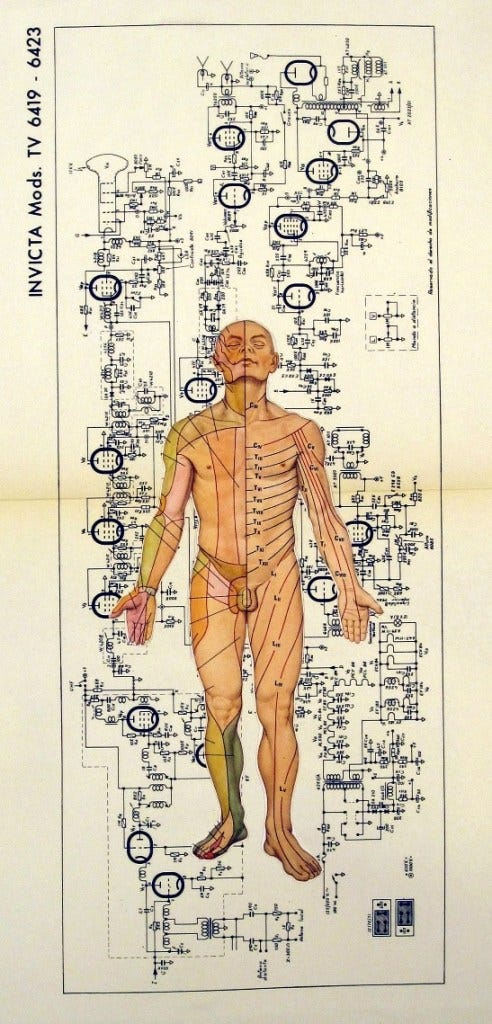
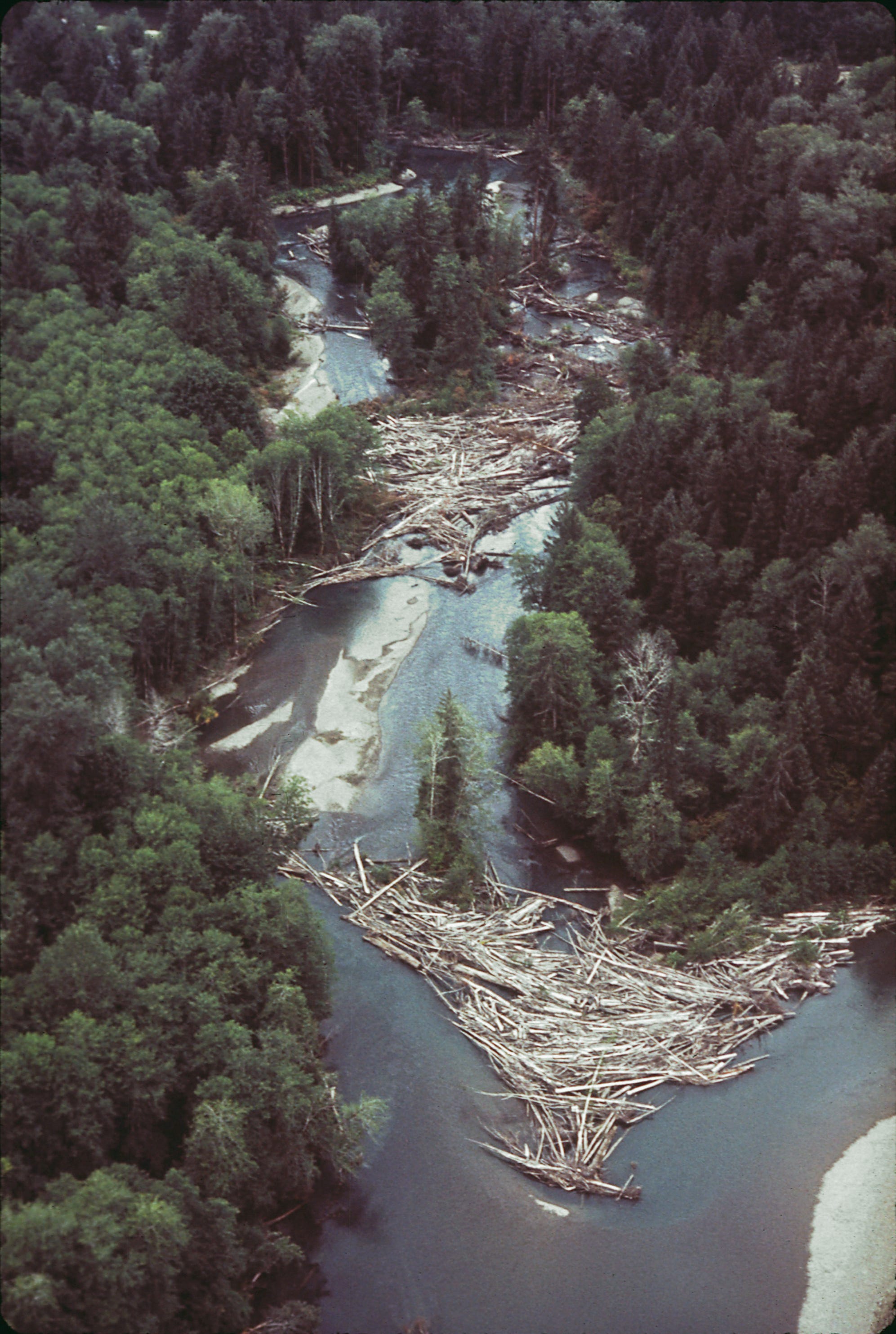
They thought a lot about how to make those desiring-machines run well. That meant breaking free from rigid structures, rules, or “territories” that box in our desires (they called that deterritorialization). Think of it like unclogging a river so water can flow. Here, the water is ideas, energy, people, or resources.
Imagine a small town where everyone follows strict traditions - who farms what land, who marries whom, what jobs are allowed. Deterritorialization would be like a big change (say, new technology or migration) that shakes up those fixed roles, allowing people to try out new ways of living without the old rules holding them back.
Deleuze and Guattari and saw capitalism as history’s greatest engine for deterritorialization. Unlike pre-capitalist societies (like feudal systems with lords and serfs, or tribes with rituals for everything), capitalism smashes those old codes. It turns everything into abstract, flowing “stuff”(money, labor, goods) that isn’t tied to specific places, families, or traditions.
For example, capitalism deterritorializes by globalizing trade: a factory worker in one country produces for consumers worldwide, ripping away local territories and unleashing desires (wanting to produce, to consume, and to compete). It’s like capitalism unclogs the river, desires can flow through the labor economy as capital chases profit anywhere.
But here’s the catch. They said capitalism doesn’t stop at freedom. Instead, it “reterritorializes” by imposing new boxes, like turning those freed-up desires into endless consumerism (buy more to feel complete) or a need to profit. Still, (for them) it’s unmatched for unclogging the river, which is why they call it the ultimate deterritorializer. It paved the way for radical change, even if it recaptures some of it under money’s logic.
I think the reason why everyone’s thinking so far in the future now (why AI feels transformative) is because we’ve unlocked the next greatest deterritorializer. One that could even outpace capitalism in unclogging the river and free up desire.
If capitalism was the bulldozer that tore down feudal walls, machine learning is the navigator that redraws the map entirely, letting flows reroute dynamically without needing profit as the compass. We enable a world where desires self-organize, externalized and link in ways that were impossible before. It’s what Deleuze and Guattari sketched out but on a global scale.
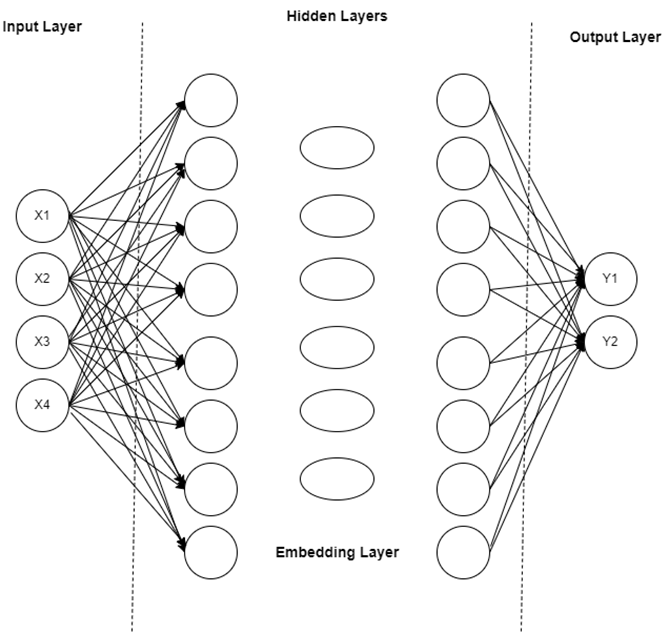
I think capitalism gave us the very tools that make this possible. Chasing efficiency and scale under market logic gave birth to transformers (neural network architectures that power models like GPT, generative pre-trained transformers, by handling relationships in data with “attention” mechanisms, letting them process vast contexts fluidly). It spawned massive models trained on oceans of data, capable of generating, predicting, and adapting.
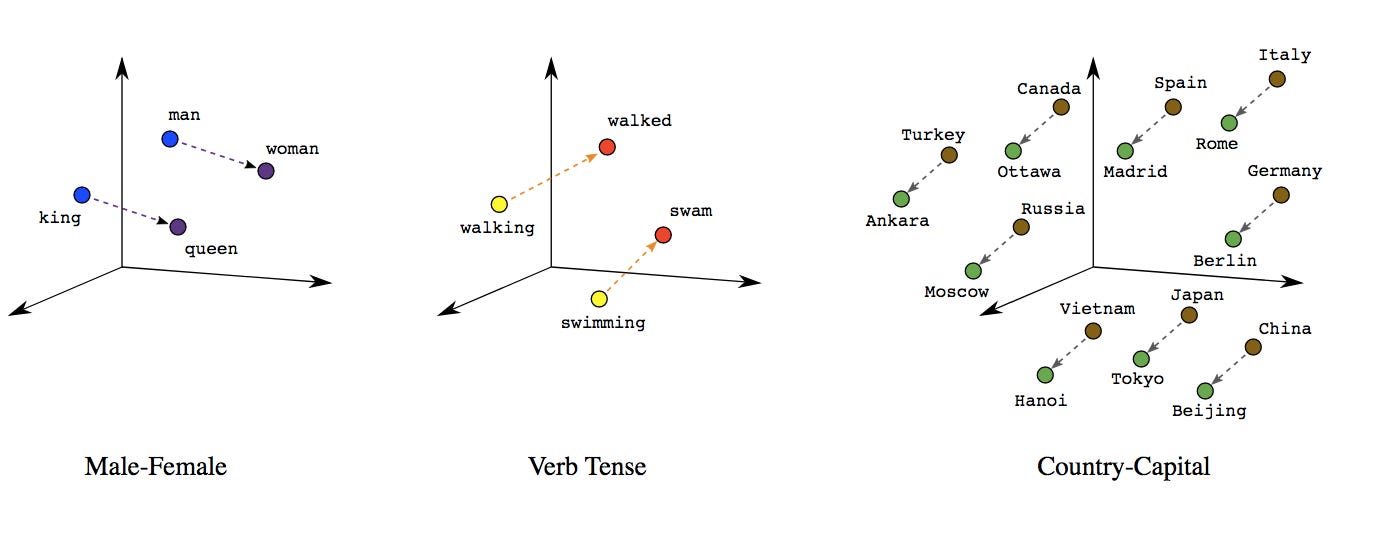
And crucially, it gave us embeddings. That’s how we turn messy human stuff (words, images, preferences) into points in a mathematical vector space, where similarities are just distances you can measure (like taking the cosine similarity to find matches). Capitalism built these for ad targeting, search engines, and a bunch of random shit we might not have needed, but they’re perfect for deterritorialization. You don’t need fixed categories or hierarchies. Everything becomes abstract, connectable flows.
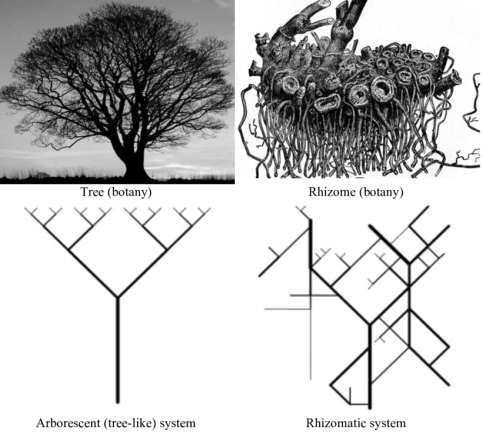
For Deleuze and Guttari, the end game here was rhizomes. They said to forget trees with their stiff trunks, roots anchoring everything in place, and branches dictating paths from the top down. That was the old territorial way with feudal lords. Rhizomes are like underground root systems you’d see in strawberry plants: they spread horizontally, popping up new connections anywhere, and resilient if cut (they’ll just regrow elsewhere).
There’s no center, no hierarchy. Just parts linking up in unexpected ways. In an machine learning world, your personal “desiring-machine” (a fine-tuned model embedding your unique wants and skills) hooks into a global rhizome via those vector spaces, routing affinities without bosses or borders.
I feel like this is a blueprint for machine learning’s potential. Capitalism’s chase for profit gifted us the tools for true deterritorialization. The new labor economy. I think there are a couple incredible gifts worth mentioning.
Parallel computing, born from market demands for speed (think NVIDIA’s GPUs powering finance and gaming), scales across nodes without central chokepoints. More excitingly think Sohu, specialized chips to let you run (and, importantly, train) transformers blazing fast
Transformers, machine learning lets algorithms learn patterns from data, but transformers (from that 2017 “Attention Is All You Need” paper) revolutionize it: self-attention weighs relationships dynamically, finding patterns in data without need for explicit labeling
Embeddings, specialization from capitalist division of labor becomes modular: your domain expertise embeds into a personalized model, plugging into others ad-hoc
Imagine a future where everyone crafts their desiring-machine, their knowledge and skills into a transformer-fine-tuned model. Then, an embedding layer externalizes those flows into a shared rhizome. Labor becomes non-rival. You can instantly route tasks or anything to the perfect person. We obsolete trees and the web self-organizes.
The distinction here is incredibly important. I see two endgames.
The tree: A handful of companies accumulate data and create the desire machines we all run on. Any task or question gets routed to one of them and maybe it’s the ideal match, maybe it’s not. There’s still a lot of clogs in the river.
The rhizome: Everyone gets to participate as a node in a decentralized, interconnected network. You can share data and route tasks or questions organically. Everything flows unimpeded and adapts in realtime.
If your goal here (I’d say it’s mine) is to “understand the universe”. Then, I think your choice here is incredibly important. If you believe that facts are embedded in a particular ways of seeing the universe, then “understand the universe” means something different based on your vantage point. Basically, I’m saying the question we’re begging here is “from which universe”.
Jane Tompkins (a historian) was fascinated by this question through the lens of historical analysis. She argues that what we call “objective” history is usually just a dominant perspective that forgot it was one. Western historians dismissed Native American accounts as myth because they didn’t fit Enlightenment standards of evidence, linear causality, or authorship. But that dismissal wasn’t neutral. It was a choice of epistemology (understanding how we decide what’s knowledge versus opinion). A weighting of some sources over others.
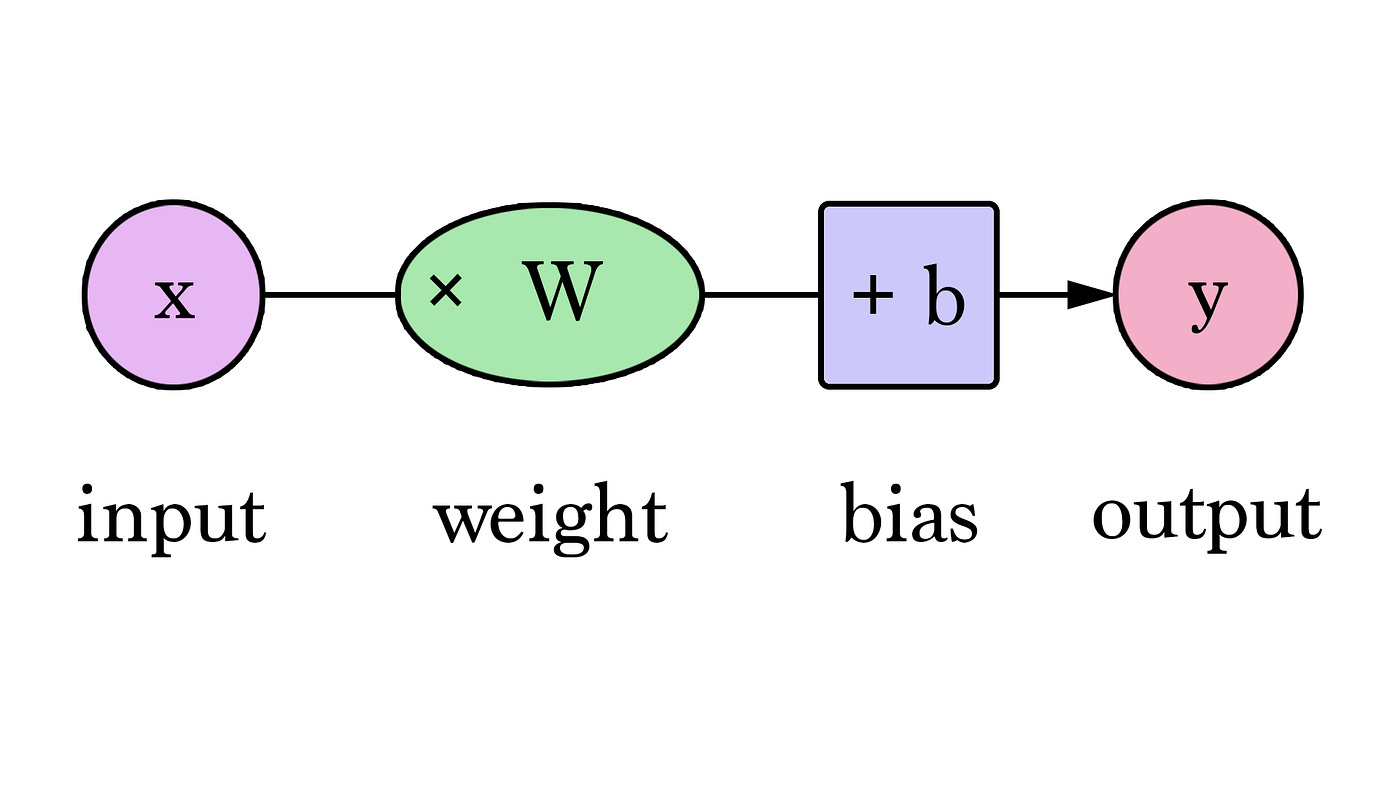
One of the most useful things machine learning has done is make it clear how bias impossible to ignore. Models don’t pretend to see the world “as it is.” All they are are mathematical functions that map inputs to outputs. It looks a little like this.
weights - this determines how strongly an input effects the output (larger = more influence, smaller = less)
\(y = w_1x_1 + w_2x_2 + \dots + w_nx_n\)biases - this is the constant term added to the output, it sets the models baseline prediction (you might think why have it all, but then you’re essentially making it zero which is still a choice and usually unrealistic)
\(y = w_1x_1 + w_2x_2 + \dots +\mathbf{b} \)
During training, the model adjusts weights and biases to reduce error between its predictions and the correct answers.
If something is consistently useful, its weight increases
If something is misleading, its weight decreases
The bias shifts to match the average output
Every prediction is conditional and every output is perspectival. There is “no view from nowhere”.
It’s all the same thing. You can look at it as historical analysis or bayesian reasoning. Knowledge is a probabilistic belief updated by evidence, not some final revelation. Once you see that, the tree starts to look epistemically flawed.
The tree promises a single, authoritative model. One set of weights and biases. One canonical embedding space. One answer pipeline. It pretends that if we just gather enough data, the bias will wash out and objectivity will emerge. But the math and history show the opposite: scale doesn’t eliminate perspective, it amplifies it.
The rhizome, instead, matches how the knowledge actually behaves. Multiple models. Multiple biases. Continuous updating. Truth doesn’t emerge from a central authority, but from the interaction of many partial views. You don’t get consensus as uniformity, but coherence across differences.
In that sense, machine learning is a confession. It admits, in code, what philosophy and history have been circling for centuries: that knowledge is always local, always weighted, and always contingent on where you stand.
Deleuze and Guattari’s idea of multiplicities gets at why a single, reconciled model is the wrong object altogether. A multiplicity isn’t many views of the same thing waiting to be averaged. It’s many internally coherent structures, each defined by their own weights and biases. Different perspectives aren’t just different biases on a shared axis, they imply different feature spaces and different questions. Averaging them inside one model doesn’t preserve this structure, it collapses it.
What large, unified models actually do is smooth over incompatibilities so they can interpolate, not understand. A rhizomatic system keeps multiplicities separate but connected: many models, each with its own perspectives/vantage points, linked through embeddings and routing rather than merged weights.
I don’t think understanding the universe will come from forcing unity, but from navigating between perspectives and holding their differences/tension instead of pretending they cancel out.
I’m probably missing something… but there’s a couple things I think you need to make it happen:
Compute: You need great chips that can run transformer models super efficiently, ways to generate the power to run them, and ways to transport than power (think: Etched, Valar Atomics, Base Power)
Models: You need great open-source foundation model that can perform economically valuable work (think: Google Deepmind, Llama)
Data: You need great ways to generate reinforcement learning data so people have an easy way to customize foundation models to work like them, otherwise it’s one size fits all (think: Mercor, Applied Compute, Maniac)
You also need a way to use that data to fine-tune a model (think: Thinking Machines)
Applications: You need great ways for people to use all of this (think: literally everything you see now)
Marketplaces: You need a great way to route to the right fine-tuned model through some embedding space so it’s not one size fits all (just as the right hire for firm A might not be the same for firm B, the right model likely isn’t either). I’m excited to see how this pans out.
I think that question I asked earlier is basically this: is your endgame the rhizome or the tree, and what part of the stack are you working on?